


The best ways to increase sales from a website
This article is 5 years old — prices and terms may have changed.
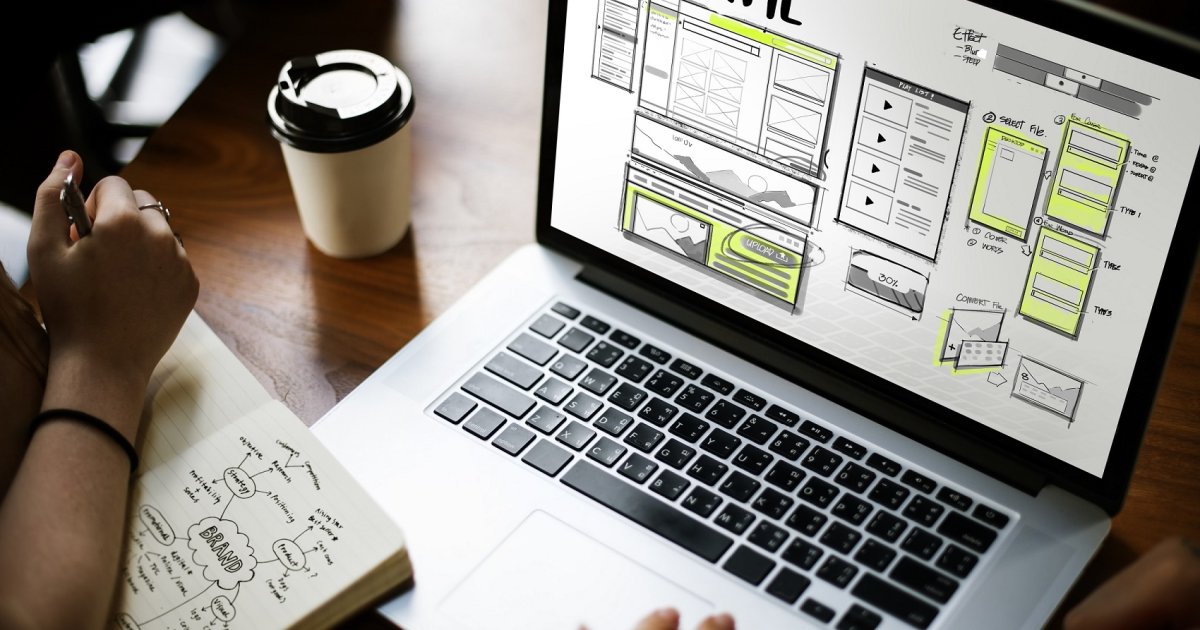
The number of enquiries and sales a site generates depends on dozens of factors. Many of them are small details whose connection to sales is not obvious — yet each of those points decides how convenient and pleasant it is for a visitor to buy on the site.
What is more, many factors shape the result before work on the site even begins. Let us go through the main ways to increase sales from your site.
Work out in detail who your potential buyer is, and segment the market

To sell successfully offline or online you have to study your target audience. It matters to understand who you are selling to — particularly if you sell a specific brand of goods or a single category, such as Apple hardware or camping equipment. Steven Silbiger showed the importance of segmentation and of the buyer persona clearly in The Ten-Day MBA.
Build a buyer persona — a portrait of the ideal buyer, which includes:
- age characteristics,
- interests,
- values,
- problems,
- motives for buying.
To build a portrait of your buyers you need to segment the market. Aim at a particular segment and your marketing becomes more effective, raising the number of sales and the profitability of the business as a whole. Without segmenting, you will aim your advertising and your site's content at people who are not interested in either.
There are four main approaches to market segmentation:
- geographic;
- demographic;
- psychographic;
- behavioural.
Two or three approaches often have to be combined. But first it is worth understanding how each type of segmentation works.
Geographic — everything here is obvious. You need to know which cities and countries you want to sell in through the site. Whether the site is multilingual, and how the resource is structured, depend on it.
Demographic — here the market and the site's audience are split by several criteria. Among them:
- Age. Different generations logically have different needs and tastes.
- Gender. Men and women buy different goods and use different services. A business needs to know who each offer is aimed at.
- Purchasing power. Simple enough as well: there is no point aiming premium advertising at people on a minimum income.
- Family status. Marriage and children change a person's buying behaviour and preferences. If you want to sell effectively through a site, that fact has to be taken into account in your content strategy, your advertising and your marketing.
- The stage of the family life cycle.
- Education and profession. How demanding a buyer will be depends on them.
- Ethnic, religious and other affiliations.
Psychographic segmentation takes several criteria into account:
- Way of life. The term covers interests, activities and views.
- Personality traits. Whether the site's target audience tends towards caution when buying and when trying something new, or towards boldness.
Behavioural segmentation is the hardest approach, but it yields the most valuable insights, the ones that will make your site and your marketing as a whole more effective. The main criteria for segmenting users by behaviour:
- consumption habits;
- the occasion for buying;
- the degree of loyalty;
- the reaction to promotions and price changes.
It matters not only to choose the right group but to judge which groups are worth considering at all when building a strategy for promoting the site.
Audience segments should be picked out against several criteria:
- Measurability. Can you identify the segment and describe it at least roughly in numbers?
- Accessibility. Can you reach this particular segment through advertising or content on the site?
- Significance. Is the segment big enough to aim at? How is its size changing?
- Profitability. Can sales to this segment bring in profits large enough?
- Competition for customers. Do your competitors work with this segment? Are they aiming marketing activity at it, or do they consider it unpromising?
- Capability. Can your company meet this segment's needs?
- Defensibility. Will you be able to defend yourself against competitors' attacks?
If the answer to most or all of those questions is yes, it makes sense to aim your marketing as a whole and your site at the chosen segment. In that situation you stand a good chance of selling a great deal, and profitably.
A detailed portrait of the customer and correct market segmentation will become the foundation for planning a marketing strategy and for making exactly the decisions that increase sales.
Choosing the right domain and hosting
We have said already that there are no trifles in marketing and sales. That applies to choosing a domain and hosting for a site.
The domain. A shop's address should be easy to remember and should point to what the company does. If the name is complicated, too long, or an obscure abbreviation, it will be awkward to type and hard to take in by ear.
The main recommendations for choosing a domain:
- a keyword in the domain name is a plus;
- the domain name should say clearly what the company does;
- a maximum length of 15 characters;
- the address should not resemble the domains of well-known brands;
- do not use dashes or hyphens;
- avoid doubled letters — they raise the risk of a typo when the domain is typed.
That is why Host4Biz recommends choosing good domains and registering them with us.
Hosting. Where and how your site is stored decides whether it can work quickly and correctly even at peak traffic. So it is always better to choose hosting with disk space and power to spare.
If traffic is going to grow over a long period, consider moving to a VPS. That will make the site faster still — and loading speed is one of the main ranking factors.
An SSL certificate. A secure connection is another important ranking factor for search engines. And visitors themselves trust sites that protect their personal data more. So when you order hosting for a site, install SSL as well.
Optimise everything you can reach

Only a well-built, well-optimised site will sell well. The page takes a long time to load, the product is hard to find and there is no quick ordering? Hardly anyone will buy on a site like that.
Low conversion at the starting stage will get in the way of promotion. So give as much attention as you can to the site's usability, its functionality and its loading speed.
What to look at first of all:
- Loading speed. Pages should load quickly on any device; up to two seconds is the optimum. The figure depends on the hosting, the weight of the page, image optimisation, the amount of code used and more.
- Availability on mobile devices. Mobile traffic keeps growing, and more and more purchases are made from smartphones. So it is worth taking care of visitors who come to the site from a mobile: make sure every page works properly and delivers a good experience.
- Make sure visitors can come back to their basket later, even from another device. Conversions often happen over two or three sessions. Keep that in mind in how the site works and in your marketing activity.
- SEO. The site's structure should be convenient for visitors. Optimise every page for relevant search queries. Setting up pagination correctly matters too. We wrote about what works in SEO in a separate blog article.
- Indexing. Make sure every page of your site is indexed. Configure robots.txt and sitemap.xml. We covered what else can get in the way of indexing in another article.
Limit the choice
At first glance that sounds strange, provocative and even illogical. In fact too many options weaken the resolve to buy.
If the shop has a wide range, structure the information so that a potential buyer's eyes do not wander across the abundance of options.
You could, for instance, make the product cards larger and show the block of similar products lower down.
Make the checkout as simple as you possibly can
Visitors will not like a complicated checkout. If the order form is too involved, the goods may stay abandoned in the basket forever. That is a very serious problem, and every online marketer working in e-commerce is looking for a solution to it.
According to Business Insider, in 2020 alone more than four trillion dollars' worth of goods were abandoned in baskets. More than 60% of them can be brought back and turned into purchases. Those figures show that work on the order form will certainly pay for itself.
To avoid losing buyers, follow a few rules:
- ask for the minimum of information;
- save the delivery details in the customer's account;
- if a customer closed the form and later came back to the order, do not make them enter all the information again.
Offer free delivery
According to Acquisio, more than 40% of people abandon a purchase if free delivery is not offered. The figure can vary considerably depending on the market and the price segment. Here again, information about potential buyers, their categories and the way they behave comes in useful.
Amazon used an interesting solution. The world's largest marketplace offers free delivery on purchases from 35 USD. The statistics show that in most cases buyers pick additional goods rather than abandon the purchase or agree to pay for delivery.
A second option is to raise the price so that you can cover delivery.
A third solution is to offer flat rates. When the price is the same every time, buyers know at once what delivery will cost, and predictability does not scare anyone off.
Use free content and discounts
Launch campaigns by email and through messengers. They can carry useful information, catalogue updates and special offers. A 10% discount can be offered for subscribing.
If you run an online shop, you could also offer catalogues with examples of flat design or reviews of fashion trends in clothing. There are plenty of ideas: in almost any niche, useful content can stimulate sales.
Launch a loyalty programme and keep developing it
With ready-made plugins for an online shop, or with custom solutions, you can launch a loyalty programme for buyers and grow it.
The main thing is to work out the size of the discount for every group of regular customers and to set those discounts up correctly on the technical side.
Create an affiliate programme
Work out what acquiring one buyer costs you and offer that sum as commission to potential partners. Launching an affiliate programme calls for serious technical and organisational work, so it is better to use this tool only once all your working processes are in order and you are receiving a large number of orders.
Run competitions among buyers and subscribers
People love games and presents. People very much love testing their luck. Competitions with worthwhile prizes are an excellent way to raise reach, gather more comments and attract new subscribers.
Two difficulties come with running competitions:
- you need a genuinely attractive prize;
- you must already have an audience lively and active enough to comment on the post and take part in the draw.
Use the site and social media to announce them. Competitions raise recognition and affect the number of sales at the same time.
Recommendations that will help you get the most reach and engagement:
- publish clear terms for the competition;
- invent a unique hashtag for the competition posts;
- if the format calls for posts from users, make a few examples that will inspire them to put their entries together;
- protect the rights to the content the participants create;
- moderate the comments actively and talk to the people taking part.
Make active use of cross-selling
Think about what additional goods and services can be offered to buyers to raise the average order value and the site's other marketing KPIs. The simplest example: offer the buyer of a smartphone a case, a screen protector, headphones or an extended service plan.
Cross-selling can also be driven through email campaigns.
Offer popular products

Many restaurants mark the most popular dishes and drinks on the menu. Why not do the same with a product catalogue in e-commerce?
Add a block of popular products to the site. Those can be the items that genuinely sell very often, or the ones that bring the most profit when they sell.
Launch interactive support
Buyers need support and quick answers to the questions their decision to buy depends on. A chatbot for the site, together with a way to reach a member of the customer support team, can solve that.
The textbook example is choosing the right size of clothing or footwear in a shop. Size charts do not always do the job, so it matters that a potential buyer can call or write and get an answer to the questions that have come up.
Interactive quizzes for choosing the right product can be used as well — for glasses, accessories, bathroom fittings or household electronics.
Interactive support can bring an element of gamification into how a site works, among other things through functions that help choose or vividly present products. Such visual elements are of course harder and more expensive to build, but they pay for themselves.
Shoot and publish video

When optimising a product page, add not only photos but a short video presenting the product. Creating your own YouTube channel is an excellent move too: it becomes an extra source of traffic and helps build a community of loyal customers.
On the channel you can publish:
- product reviews;
- tips on using them;
- unboxing videos from customers (with their consent, of course);
- announcements of new arrivals and more.
Remember your risk reducers, and make them prominent
The more expensive the product, the more doubts and objections arise before the purchase. You can work through all of them with content and with risk reducers. Those can be:
- money-back guarantees;
- the safety of buying in the shop;
- clear terms for returns and exchanges that favour the buyer;
- fast delivery.
It matters that all the important information is on the product page. It is also worth creating separate tabs or pages with information for the buyer. Make sure as many visitors as possible see that content.
Use reviews and other elements of social proof
Reviews, ratings and other elements of social proof belong on the site without question. Buyers should see that a product is not merely being promoted but recommended by real people. Combined with familiar advertising, competitions and gamification, that has an excellent effect.
Gather feedback
Create a convenient form on the site for reviews and suggestions. Information can also be gathered through a chatbot or with contact forms. Rather than burdening people with long questionnaires, you can publish a post with a single question once a week and organise the comments.
What is worth learning from your visitors?
- How satisfied are they with the experience of buying?
- Is the site convenient for placing orders?
- Is it easy for them to choose?
- What would they like improved?
Use news hooks
We have already written about preparing a shop for International Women's Day on 8 March. But that is only one of hundreds of hooks you can use to attract attention.
A hook can be:
- a holiday;
- news connected with your business;
- new products reaching the market.
There are masses of options. In practice the only limit in situational marketing is the marketer's imagination. So a small piece of advice: before deciding on a job offer for a marketer, check how they are doing for creativity.
Conclusion
There are dozens of tools and techniques that will help you sell more through a site, so we will keep adding examples and new information to this article. You can also write in the comments about how sales can be increased and which methods you use.